
Hand surgeries and evaluation for hand and arm problems

Stavanger Plastic Surgery can offer assessment and surgery for a number of hand and arm conditions. Bjørn Tore Haga has many years of experience in both assessment and treatment of most hand and arm conditions, and regularly performs a number of hand surgeries.

Carpal tunnel syndrome 

This is a very common condition caused by one of the nerves (the median nerve) in the hand becoming pinched/compressed at the wrist. The patient experiences numbness, weakness and pain in the thumb, index finger and middle finger. The symptoms are typically waking up at night with numb fingers. 

A clinical examination with us will be able to confirm the condition, which can then be treated with hand surgery under local anesthesia. 

Ulnar tunnel syndrome

The condition is caused by pressure (nerve compression) on the ulnar nerve, which runs through a canal at the elbow joint. Symptoms often include numbness in the ring and little fingers, as well as decreased strength in the hand. Symptoms typically occur when the elbow is bent for a long time or at night. 

Once the cause has been identified, we will usually be able to treat with hand surgery using local anesthesia or general anesthesia. 

Tennis elbow/mouse arm (Epicondylitis) 

This is a common condition characterized by pain on the outside of the elbow, often radiating down the wrist, especially when lifting. The condition is caused by overuse of tendon attachments, usually as a result of repetitive, unilateral movements, and comes in two different forms:

Tennis elbow, located on the outside, is called lateral epicondylitis, while golfer's elbow, located on the inside of the elbow joint, is called medial epicondylitis.

Our surgeon uses a proprietary surgical technique with very good results, where approximately 95% of patients recover completely. You can also have surgery with good results even if you have had surgery before.

Health Norway: 

Trigger finger

The condition is caused by irritation and swelling of the flexor tendon of one of the fingers, causing the tendon (finger) to “hang up” in a bent position. Patients with diabetes or arthritis are particularly at risk. 

We treat this with hand surgery under local anesthesia or with cortisone injections.

Osteoarthritis (osteoarthritis) in the hand and thumb

Osteoarthritis is a condition characterized by pain and stiffness in the hand, especially in the thumb's base joint, as well as in the small joints of the fingers. The diagnosis is made with regular X-rays of the hand and the condition can be treated in several ways, including surgery under local anesthesia.

Ganglion

Another very common condition in the hand is a ganglion. This is a hard lump that protrudes from the hand, most commonly on the back of the hand. A ganglion is simply a fluid-filled sac from a joint or tendon and is completely harmless. However, a ganglion can cause pain and tenderness and it can also be cosmetically unacceptable to walk with a large lump on your hand.

Ganglion surgery is performed under local anesthesia and depending on the size of the procedure, you will be back at work relatively quickly. You may be entitled to sick leave after such a procedure if you are unable to perform your normal work duties.

Hook finger / Dupuytren's contracture

This is an inherited condition that occurs in the palm of the hand. It often starts with a tender lump, but eventually a string forms outwards towards the finger, which means that the finger cannot be extended. Over time, the finger becomes more crooked and when there is more than 30 degrees of bend in the finger it is time to treat this.

Some can be treated by dividing the tendon with a needle under local anesthesia, but most require hand surgery. It is important not to wait too long before treating the condition, as the joint can become stiff and unable to straighten.
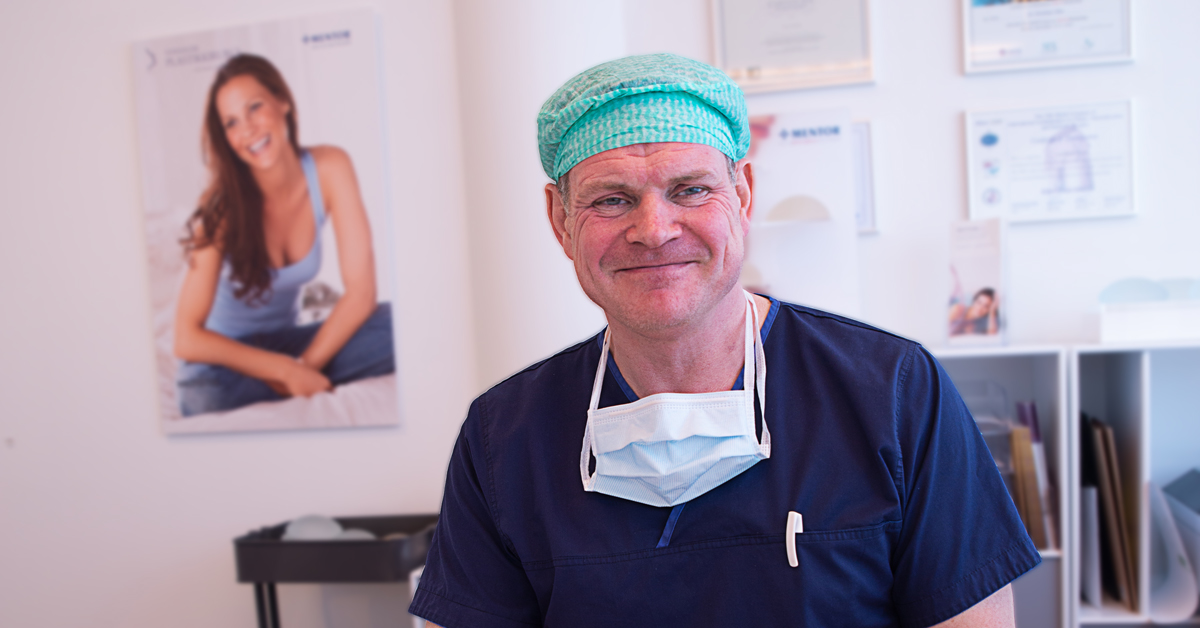
Bjørn Tore Haga, clinic manager at Stavanger Plastic Surgery
Bjørn Tore Haga, clinic manager at Stavanger Plastic Surgery, is one of the country's most experienced plastic surgeons. Bjørn Tore has extensive experience in plastic surgery. Hand surgery and cosmetic surgery are among his fields of expertise.

Who can undergo surgery?

In principle, everyone can undergo surgery as long as the surgeon has reason to believe that it is the correct diagnosis. If you are taking blood-thinning medications, the use of these must be clarified with our surgeon before the operation.

How are hand surgeries performed?

As mentioned, most operations are performed under local anesthesia, which is administered in such a way as to cause the least possible discomfort. The wound is closed with stitches that should give the prettiest possible scar.

For all hand surgeries, the blood supply is cut off using a cuff around the upper arm so that important structures in the hand become visible. The surgery takes about 30 minutes and you can go home the same day.

After the hand surgery

Depending on what has been done, the hand will need to rest afterwards, anywhere from a few days to a few weeks. Most hand surgeries also require your own efforts with training afterwards, but you will receive information about this at the clinic. As a rule, there will also be stitches that need to be removed after about two weeks. This can be done by us at no extra cost, or by your GP or other expert.

You can book a non-binding consultation with our hand surgeons via email by filling out the form on the right of the page, or call us on 51 55 85 00.

Welcome to Stavanger Plastic Surgery at Madla

Migraine can now be operated on

A simple operation, where we go behind the eyelid and create space for nerves that run through a narrow channel inside the eye socket to prevent the blood vessels that run through the channel from pressing on the nerves, can give you who suffer from migraines a significantly better life situation.

Continue reading

– The motivation lies in helping people!

Easily accessible at Madlakrossen, yet discreetly secluded and unobtrusive, is Stavanger Plastic Surgery.

Once inside the bright and modern premises, you are welcomed by a pleasant lady, and you immediately notice that the smile reaches the eyes, as it often does when the warmth and commitment are genuine. You have just met Silje Rydh-Rødal , the clinic's general manager.

– Welcome, she says, and is silent for a few seconds while you see the cheerfulness build on the face in front of you.

– And now you're trying to look discreet while wondering if I've had any surgeries and embellished anything, she laughs.
– Everyone does it the first time they come in here!

Not necessarily vanity

Silje is responsible for the daily operation of the clinic, which involves customer coordination, service and administration. She is a publicly approved care worker and health professional and has contributed since 2014 to ensuring that the clinic's patients have the best possible experience on the journey they have embarked on. The first step is to break the ice and make the encounter with the world of plastic surgery a little less scary and dramatic, an exercise she masters to perfection. Once the ice is broken, she can have a proper dialogue with the client.

– People are often a little extra shy when they first come in here. They may have seen some influencers or someone on TV who has gone too far when it comes to procedures, and are unsure whether they themselves have become overly shy since coming here. That's not the case in reality, she insists.

– As a rule, it is about real problems that need to be solved, and not about vanity.

The customer is you and me.

The popular notion of the plastic surgery client as a bleached blonde with an E-cup and a pout who undergoes one operation after another is both wrong and caricatured, Silje can report.

– The typical customer is a woman over 40, often with children, who just wants to “fix that one thing,” and she is usually satisfied with the one procedure.

Although one customer group is more frequently represented than others, Silje is clear that plastic surgery is not for a select few.

– The customers are you and me. They are ordinary people of all ages and of both sexes with problems they want solved. Maybe they have a little extra around their waist that they want to get rid of, breasts that they feel have become a little saggy after breastfeeding three children, or maybe they just think the wrinkles have become a little too visible a little too early. Many come with things they have struggled with since childhood, but have been reluctant to talk to anyone about, either because it is embarrassing or a little taboo; be it protruding ears, labia that give them physical discomfort and pain, or male customers with enlarged mammary glands. This is not exactly the kind of thing you would casually discuss with friends or family, but the problem is still real and can be solved. It may not be life-threatening, but if we can help you with something that has bothered you for years, it will often have a positive effect psychologically. Many customers leave here with a slightly straighter back than when they came, she smiles.

Security and expectations

Silje has many years of experience in the industry. She has seen most things before, and has a unique ability to defuse and talk openly with the customer about things they might find embarrassing to talk about.

– Furthermore, I – just like the doctors – have an absolute duty of confidentiality. Discretion is a given with us. The patients are in a vulnerable situation when they come in, so it is important that they feel safe, understood and cared for.

She also points out the importance of ensuring that the customer's expectations are in line with what can actually be achieved.

– The client needs to understand that they may not achieve the ideal body they want. They can't bring a picture of their role model and say, "This is how I want to look afterwards." It is especially important to have realistic expectations of the result.

– We are looking for the customer's motivation for making a possible intervention; whether it is the customer's own desire or whether there are external influencing factors at play.

In many ways, you could say that she screens potential patients.

– We are 100% honest with the patient about whether we agree that an intervention is necessary or not.
There have been cases where we have rejected patients because they are simply beautiful and good enough as they are, and we do not believe they will become even more beautiful if they have surgery. In those cases, we have been careful to explain why, and perhaps referred them to other agencies that are more suitable.

– We are not here to sell operations, but are a serious player, and we should be able to go home from work with a clear conscience, she smiles, and adds:
– Our motivation lies in helping people!

– We see the need and want to help

Do you have a tattoo you regret, an embarrassing scar, or maybe you just feel like decorating yourself a little? 

– You don't have to live your whole life with a problem that impairs your quality of life. Many problems are also often a bit taboo and not something you discuss in your circle of friends. Then it's easy to feel alone. For me, it's important to convey that there is a solution to the problems. Ailments that may have been there since late childhood can be gone within a few hours, says Elin Ovedal , a cosmetic nurse and intensive care nurse with special expertise in laser and IPL treatments.

Elin is one of the most experienced cosmetic nurses in the country, with over 20 years of experience in the field. The gentle southerner started Rogaland Laserklinikk in 2006, ran it until it was sold thirteen years later, and then chose to come to us at Stavanger Plastic Surgery.

“The goal is not perfectionism,” she emphasizes. 

– But for many, small problems can grow into big ones, making people insecure, and thus controlling parts of their everyday lives. We can solve many of these problems. We see the need, and we want to help.

Laser too small, laser too big

For those involved in skin enhancement, lasers are perhaps the most important tool. In the right hands, lasers can be used for most types of skin enhancements: removing wrinkles, scars, stretch marks and other irregularities, treating large pores, visible blood vessels or pigment spots, removing hair and tattoos – or simply just to freshen up the skin. A special laser treatment, the so-called Mona Lisa Touch, even tightens the vagina. And few can do lasers better than Elin.

– We choose the laser and set it according to the task it will perform and what you can tolerate. For wrinkles, for example, we use fractional CO2 lasers that remove the top layer of tired or damaged skin. The skin will then grow back smoother, the damage is repaired and the skin becomes more elastic, she explains.

– But lasers also have their limitations, warns Elin, with a smile.

– When you are 60, your skin doesn't look like 25!

During the consultation beforehand, she is careful to explain what she thinks you can achieve, what is needed to get a good result, and what you can do to make the effect last longer.

– much can be improved

Many people also want Elin's help with scar removal. 

– We can perform scar removal or improvement anywhere on the body, including the face. Different customers have different needs, but we can usually help. Not everything can be completely removed, but a lot can be improved, says Elin. 

She says that self-harmers are part of the customer base, and she has something to contribute here as well. 

– If the cuts are so deep that the scars are white, they may be difficult to remove, but the treatment will have a good effect on unevenness. We can also lighten spots and scars after injections.

 Elin can also help with surgical scars. 

– Here, the patient must wait until at least six months have passed after the procedure before we can do anything. Skin that forms keloids, an overgrowth of scar tissue that appears as nodules or larger areas that rise above the skin surface and beyond the original wound, can become unsightly. Therefore, it is important that we do a proper assessment in advance, she explains. 

– We can even treat scars after cesarean sections, but it must be considered whether the area on the sides needs liposuction first. 

Sun, acne and hair

Raised on "the soft coastal strip," Elin is no stranger to the effects of the sun's life-giving rays.  

– We Norwegians love the sun, but not as much about applying protection. That's why we see and treat a lot of sun damage and pigment spots. Pigment spots are often treated with IPL (Intense Pulse Light), she says. 

– The same applies to rosacea, or if you are red for other reasons. This can also be combined with laser. 

She also deals with some acne problems, but recommends taking it slow. 

– If we bring someone in with acne, we don't touch it while the acne is active. Large pores or "holes in the skin," also require some treatment before we can use the laser, but this can also be improved.

In addition, lasers can be effectively used for hair removal – all over the body. 

– And, she smiles.

– Hair treatments are also for men.

Tattoo removal 

Tattoos are popular, but not always well thought out, which is why Elin notices a lot of demand on the removal front. 

– Some want them completely removed, others just want to tone them down in advance of a cover-up. But remember that cover-up tattoos on top of laser-treated skin are even harder to remove! She says this for a reason: the same people come in time after time to have tattoos removed. 

– Color is more difficult to remove than black. This is because black easily absorbs energy from the laser. Removing yellow and pink, on the other hand, is almost impossible. In any case, it is a good idea to allow plenty of time, as the treatment almost always has to be performed several times. It is not something you start with the week before the wedding!

The removal itself is easy and relatively quick. If you want anesthesia, you can apply Emla cream at home one hour before. However, you will not be able to eliminate all pain; unfortunately, removing a tattoo is not without discomfort – but no worse than most people manage it just fine.

– The treatment can cause up to 2nd degree burns, which look bad, but it will eventually heal completely. After 4-6 weeks, you are ready for the next treatment.

She says that since 2001, a lot has happened on the tattoo front: there was bad stuff in the beginning, but the technology is significantly better now. 

– Customers should look for practitioners who use the latest technology; this is a clue as to whether they are up to date. Several clinics still use old laser technology for tattoo removal, but those who are up to date know that picosecond lasers are the ones to use.

Injections and fillers 

Elin can do more than just use lasers; she is also an expert in injection treatments* and fillers. The former is injected to paralyze the muscles in the forehead, eyebrows and around the eyes, which in turn removes wrinkles. The treatment may need to be repeated, with 3-4 months between each treatment at first, but eventually it will not be needed more often than 1-2 times a year. For treatment of sweating, the injection* is injected under the arms, in the abdomen and on the hands. It can also be used for clients who grind their teeth, and for tension headaches.

Fillers are used purely cosmetically. 

– They are used wherever you need volume, typically lips, or in the area from the nose to the jawbone. It tightens the skin by stretching it, explains Elin, adding that sometimes instead of injecting fillers, she refers you to a plastic surgeon. 

Not for everyone

Not everyone who wants it should be treated, and then Elin lets us know.

– Not everything can or should be done, and we can't perform magic. We reject some people because they are already fine and treatment is simply unnecessary. Then we are careful to tell them that, she says.

– We never use injections and fillers on people under the age of 18, and if laser treatment is required, such as scar correction or tattoo removal, it is always done in collaboration with guardians. She emphasizes that these are cases where the patient/customer is particularly affected or inhibited by what they may want to remove.

– But as I said; we see a need and we want to help. For me personally, the motivation is that I like working with people and find it incredibly fun to meet new people, she smiles warmly.

*) In injection treatment of wrinkles, a prescription drug is used. Patients must therefore be assessed by a doctor before the first treatment. After assessment and approval by our doctor, you can book an appointment directly in online booking.

– I love what I do

Our new clinic manager, Bjørn Tore Haga , has extensive and broad experience in several fields of surgery, is among the country's most experienced plastic surgeons, and is passionate about the profession.

– I am probably, as the cliché says, genetically burdened, he smiles. At first glance, it is difficult to imagine that behind the good-natured, well-trained facade hides one of the masters of plastic surgery in Norway, a professional who, despite several decades in the discipline, has preserved his curiosity and respect for the profession.

– My father is a plastic surgeon, and I think that's what lit the spark. So then I studied medicine in Bergen, followed by rotations in Kristiansand and in Hitra. For a short period I worked as a general practitioner/regular doctor, while also taking shifts in hospitals. Then I was in the orthopedic department for a year and a half, before I went to the plastic surgery department at Ullevål. In 2001 I became a specialist in plastic surgery, he sums up. 

– Happy to operate

For the next 19 years, he was based at Haukeland Hospital as a consultant at the Plastic Surgery Department of Health-Bergen, of which three years as head of the department, a position he resigned. 

– Management wasn't for me, I'm far too fond of operating. I think I have more talent for surgery than for administration, he laughs.

His talent for surgery is indisputable. While he was a consultant in plastic surgery at Haukeland, he has been a general surgeon at Haraldsplass Diakonale Sykehus (1.5 years), consultant in plastic surgery at Volvat Medical Center in Bergen since 2001, and consultant in plastic surgery at Medi3 in Ålesund since 2013. He still holds the latter two positions, but left Haukeland and the public health system in 2020.

– As a public doctor, you operate and leave the follow-up of the patient to the doctor on duty. As a private doctor, I operate and follow up on the patient: they become my patient, and I see the result directly, can self-criticize, adjust and possibly change to perfect. I constantly have to take responsibility for whether something can be improved!

– Surgery is mass training

– Many specialize early and become thin very quickly, says Bjørn Tore. He himself has operated on everything from a newborn to a 90-year-old, and has both advanced hand surgery, migraine surgery and a wide range of operations within cosmetic surgery in his repertoire. In addition to cosmetic surgery, he has worked extensively with reconstruction after injuries and breast reconstruction. 

– Breast reconstruction can involve moving a piece of skin and subcutaneous fat from the lower abdomen to the chest and creating a new breast, he explains enthusiastically.

– We choose the lower abdomen since most women have excess skin and fat of the same consistency as the breast here, so we get a breast with a natural shape and soft consistency. In addition, the new breast will change in size like a normal breast when weight changes, as the breast mainly consists of fat. This is possible because we take blood vessels from the donor area and use microsurgical techniques to connect these with blood vessels on the chest so that the new breast gets blood! He smiles at his own commitment, and adds:

– I love what I do!  

 The above is also an example of how the breadth of Bjørn Tore's work provides insight that he can use when working in other fields, while also expanding and maintaining his technical repertoire. 

Surgery is mass training,” he states.

– You have to experience it. You can't read your way to being good. 

A lifestyle

Bjørn Tore was born and raised in Bergen, and this is also where he lives – when he is not at work in Ålesund or Stavanger.

– There will be a few travel days per year, and travel expenses of several hundred thousand, but it is part of the lifestyle, he explains.

– What's more, it doesn't feel like a burden when you do what interests you, and those around you share the interest: both my partner, sister and father are plastic surgeons. And there's always something new to learn, he enthuses.

– People are so incredibly smart, there is something new happening everywhere all the time, so in addition to operating, I am at professional conferences all the time. It's good to be in that dynamic.

Now Stavanger Plastic Surgery is also part of the aforementioned dynamic.

– In Stavanger, things are small, and Silje (managing director) knows everyone. Here I have good, enthusiastic people around me, and a feeling that here we take care of people, we help them! That's why it's extra nice to stumble upon this, and be part of developing it. At the same time, I have experience to bring to the table that they didn't have before within both hand and migraine surgery.

But, every now and then, Bjørn Tore also has to take a little break.

– It can be a bit of a lonely life moving around, but I'm good at using the weekends to meet friends. I also try to take a day off a week, preferably Friday, so my partner and I can take some oval weekends together. We enjoy skiing, randonee, and have a cabin plot near Geilo, with the ambition of building one someday…

Skin improvement with laser

The skin is exposed to great stress throughout everyday life and over time will experience reduced quality such as spots, blood vessels, wrinkles, impurities and/or dryness, thinning.

Continue reading

Tattoo removal

Life is constantly changing and the tattoo that once seemed like a good idea may no longer be suitable. Or do you want a new tattoo over the old one? There can be many reasons for wanting to remove a tattoo, and research suggests that at least 50% regret one or more tattoos during their lifetime. Whatever the reason, it may be possible to have it removed! We at Stavanger Plastic Surgery have been fortunate enough to have nurse Elin Ovedal from the former Rogaland Laser Clinic join us – she has many years of experience with tattoo removal with laser and what could be more natural than that we have now purchased the very best machine on the market today – pico laser technology finally in Stavanger – read more about this here!

The technology behind tattoo removal

1. Faster pulse : A tattoo is in a way a “colored scar” where a needle has entered the skin and left a dye. This can be different dyes, different colors and not least different depths in the skin. This makes it challenging for a device to effectively remove many tattoos. Traditionally, machines with so-called “nano” technology have been the tools available. As the name suggests, such a machine has laser pulses in nanoseconds (millionths of a second). These are pulses that break down the small pigments so that they disappear. The problem has been that nanosecond pulses have not worked on the smallest pigments. Therefore, even more advanced machines have now emerged that pulse laser light even faster – in picoseconds, which is 1/1000th faster than nano! Picolaser technology therefore works on even smaller pigments and a larger part of the tattoo disappears. It can be compared in a way to a stone down to gravel with nano and then to sand with pico.

2. More powerful power : Another important aspect of laser treatment is the mechanism of action itself. Laser is actually light of a specific wavelength. Different wavelengths of light are absorbed by different colors. When light of a specific wavelength hits the skin and pigment of the “right” color, the light is absorbed by the pigment and converted into a “sound wave” that shakes or explodes the pigment. The greater the energy of this light, the more powerful the sound wave and the more pigment is exploded. This is why we have chosen to invest in the Lumenis PiQo 4 – a machine with superb power of over 10 times that of competing systems for both the 1064nm and 532nm wavelengths (the power is 650mJ & 325mJ respectively for those who are particularly interested :).

3. Larger energy point: Another big advantage for you as a customer is that this machine has up to 4 times the spot size of the laser light itself than any other machine on the market today. Larger spot size not only means faster treatment and thus less discomfort, it also provides a greater dispersion of the energy and thus a lower risk of blistering, discoloration and scarring.

4. Wide color spectrum : As mentioned earlier, the color of the tattoo absorbs specific wavelengths of light. Therefore, you need different wavelengths to absorb the different colors. The Lumenis PiQo 4 therefore offers 4 different wavelengths to ensure that you can treat as wide a range of colors as possible. These four wavelengths are 1064nm, 532nm, 650nm and 585nm - together, it targets 9 of the most commonly used tattoo colors from light orange to darkest black. With the Lumenis PiQo 4 , you can literally erase the rainbow!

Who can perform a tattoo removal?

Most women and men over 18 can undergo treatment. We do not treat pregnant women, so you may have to wait until after giving birth. There are some medications that can make the skin sensitive to light, so always inform the therapist about your medications in advance.

General information about sun and laser treatment

It should be at least 3 weeks after “a lot” of sunbathing before you can have a treatment. However, if you have used sunscreen and your skin is not burned or very tanned, it is possible to start somewhat earlier.
 
After laser treatment, you should wait 3-4 days before you can go out in the sun.

Generally

If you have any questions or would like to book an appointment, call us today at 51 55 85 00, or click the “book a consultation” button on this page to send an inquiry by email. We look forward to treating your tattoos with us at Stavanger Plastic Surgery!
 
 
The medical director for laser is plastic surgeon Thale Riisøen.

Scar correction

Scar correction

It is common to want to improve one or more scars on your body. However, it can be difficult to improve scars that have already formed, especially if you have a tendency to create unsightly scars.

Book a consultation

Would you like a consultation from our doctor or answers to your questions? Fill out the form and we will contact you!

Please do not share sensitive personal information in the inquiry.

The skin always forms scars after it has been "opened" in some way. This applies whether through previous surgeries or after injuries and accidents. Sometimes the scars become less beautiful. This can be due to either incorrect scar treatment, poor craftsmanship from the person who operated on you or, not uncommonly, because your body has "overreacted" and created a scar that is too large.

It is very common to want to improve one or more scars on your body. However, it can be difficult to improve scars that have already formed, especially if you have a tendency to create unsightly scars. How the scar looks also depends greatly on where on the body it is located.

To know whether your scar(s) has potential for improvement through plastic surgical correction, a consultation is therefore necessary where our plastic surgeon examines the scar thoroughly. Often there will be a benefit in trying to correct a scar, but not always. One will not operate on a scar unless there is a reasonably good chance of visible improvement.

Should our surgeon believe that there is a good chance of improvement, we at Stavanger Plastic Surgery will use all known techniques to create the most beautiful scars possible. This may involve particularly small stitches, sewing in several layers and changing or twisting the scar direction so that they are less visible. However, remember that new scars will also appear after the operation and the appearance of these cannot be guaranteed.

Who can undergo surgery?

All healthy people can basically undergo surgery. If you are taking blood-thinning medications, the use of these must be clarified with our surgeon before the operation.

How is the operation performed?

The operation is performed under local anesthesia. The anesthesia is administered in such a way that it causes the least possible discomfort (thin needle, "anesthesia within the anesthesia" and possibly anesthetic cream). The wound is closed with stitches that should give the prettiest possible scar. Suspicious skin changes are always sent for examination by a pathologist. This is included in the price.

After the operation

After minor surgeries, you can do almost anything you want right after the surgery. If the procedure is more extensive, it may be a good idea to take it easy for a day or two or more. You will be given information about this after the surgery. Sometimes stitches need to be removed after one or two weeks. This can be done at our office at no extra cost, or by a GP or other expert. For the best possible scar, it is important to use tape treatment even after minor surgeries. Our plastic surgeon does everything he can to ensure that the result is as beautiful as possible, so we expect you to do your part and use tape according to our recommendation. You will be given full information about this in connection with the surgery.

Complications

Besides the formation of new scars, complications after such procedures are very rare.

We hope this has given you some of the information you need regarding aroplasty. You can book a non-binding consultation with our plastic surgeon via email by filling out the form on the page, or call us on 51 55 85 00 .

The medical director for operations and procedures is plastic surgeon Bjørn Tore Haga.

Welcome to Stavanger Plastic Surgery at Madla!

Abdominal surgeries | Labiaplasty surgery

Labiaplasty / Inner labia surgery

An operation on the inner labia is called labiaplasty.

Book a consultation

Would you like a consultation from our doctor or answers to your questions? Fill out the form and we will contact you!

Please do not share sensitive personal information in the inquiry.

Common reasons for wanting surgery are that the labia are either too large, they protrude outward or that there is a large lateral difference. For most people, this is a condition that develops in connection with puberty, but it can also occur over the years after, for example, childbirth, weight gain, hormonal influences or some form of chronic irritation. It is not uncommon to have complaints such as discomfort during physical activity such as cycling, sexual activity or similar.

Who can undergo surgery?

In principle, all healthy adult women can undergo surgery. For there to be real potential for improvement with the surgery, it must be clear upon examination that the inner labia are longer or larger than the outer ones. Alternatively, there may also be a clear difference in size or shape between the two sides.

How is the operation performed?

The procedure takes approximately 30 minutes and is performed under local anesthesia. Once the anesthesia is applied, you will not feel any pain during the procedure. If you feel the need, you can also receive relaxing medication, but remember that you will not be able to drive yourself home and you will need to be picked up after the procedure. During the entire procedure, one of our employees will be by your side and available to you if needed.

There are several surgical methods to choose from. The surgeon will review these with you in advance and together with you choose the method that offers the greatest chance of a beautiful and safe result.

After the operation

It is common to have some soreness for a few days after the procedure, but otherwise there is generally little pain. If you wish, you can get a prescription for painkillers after the operation. It is common to be able to return to work and daily life fairly quickly afterwards, usually 2-3 days. You must expect to refrain from sexual activity in the area for 4 weeks. After the operation, you will receive both verbal and written information from us about what to do after the procedure.

Complications

Complications after labiaplasty are generally uncommon. This is a blood-rich area and it is therefore normal for a few drops of blood to appear in the first few days. You will be provided with a good panty liner from us after the operation for this. Major bleeding is very rare. Premature loosening of stitches, small sores and minor irregularities may occur in exceptional cases.

Get in touch

We hope that this has answered some of your questions about labiaplasty. If you are wondering whether this is an operation for you, we recommend a consultation with our plastic surgeon who has extensive experience with such operations. Such a consultation is non-binding and can be done by filling out the "book a consultation" form on this page. You are also welcome to call us on 51 55 85 00. If you would like one of our female employees or a friend to be present during the examination, this is of course possible.

The medical director for operations and procedures is plastic surgeon Bjørn Tore Haga.

Welcome to us at Stavanger Plastic Surgery!